Casinos are all about good vibes and shared experiences. If you’re planning to hit the casino after a football game, go with a fun and easygoing group of friends. You want people who are open to trying new games, laughing off losses, and enjoying the moment. Whether you’re into slots, table games, or just soaking in the scene, having good company makes all the difference.
Take Advantage of Game-Day Deals
Many casinos offer special deals on football nights. These might include discounted drinks, free play Bet20 vouchers, or half-price food. Some even have football-themed giveaways or prize drawings. Check the casino’s website or ask the staff at the sportsbook or players’ club counter. You might be surprised by how many perks are available, just for showing up after the game.
Start at the Sportsbook or Bar
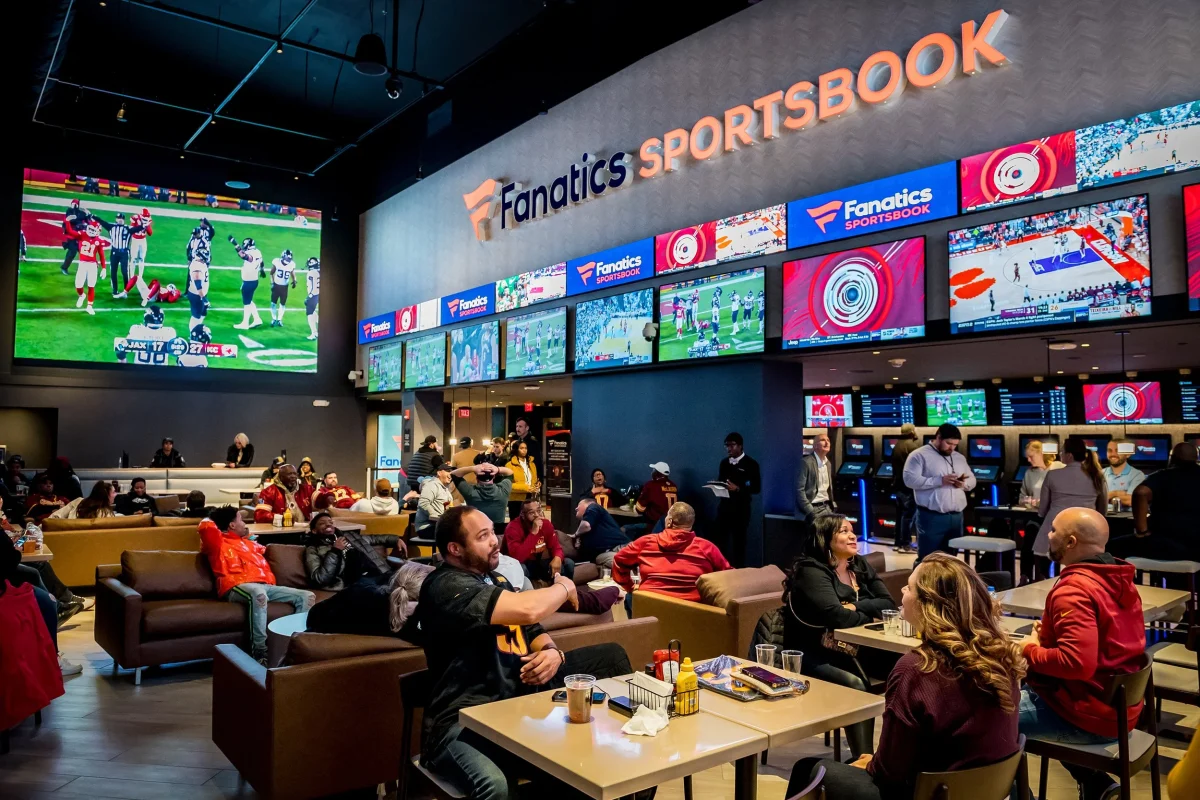
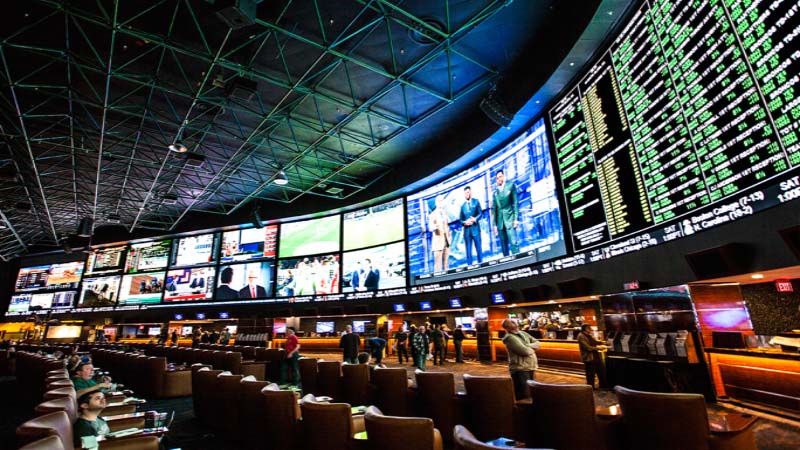
After a long game, it’s great to ease into the casino experience. The sportsbook or bar is a perfect starting point. You can rewatch game highlights, talk about key plays, and toast your team. Sportsbooks are often lively after games, with fans buzzing about the results. If you’re not ready to hit the tables just yet, enjoy a drink and soak in the energy.
Try a Mix of Games
The casino offers something for everyone. If you’re new to gambling, start with the slots—they’re easy, colorful, and can still offer big wins. If you’re feeling lucky or want to try something more social, head to the blackjack or roulette tables. Don’t worry if you’re not an expert—dealers are usually happy to explain the rules. And remember, you’re there for fun, not to make a fortune.
Keep the Mood Light
Post-football casino nights are about fun, not stress. Set a budget before you start gambling, and stick to it. Avoid chasing losses or getting too serious about every hand or spin. If you win, that’s great—but even if you don’t, you can still have a fantastic time dancing at the club, grabbing a bite at the food court, or just people-watching.
Look Out for Late-Night Specials
Casinos often stay open late and offer special menus or events after major games. You might find midnight buffets, themed parties, or live music. If you’re still riding the post-game high, this is a great way to keep the night going. These events also attract other fans, so it’s easy to strike up conversations and meet new people.
Capture the Memories
Don’t forget to snap a few photos during your casino outing. Whether it’s you and your friends posing with a big win or just enjoying drinks after the game, these moments make great memories. Most casinos allow pictures in public areas (just not at the tables), so have fun capturing the night.
Which football team do I need to support as a sports bettor? This is one of the key questions for punters. In this in-depth review, we will consider the approaches to the selection of matches and teams, which are used by professional sports analysts and prognosticators. We are sure that the information will be extremely useful to beginners. Our article is relevant to all types of sports betting. Whether you bet at TonyBet or go to betting shops, keep reading!
Choosing The Right Players
In each championship, there are on average 16 to 22 teams, in the leading leagues: 18-20. So a player who has taken in his focus of attention, say 5 leagues, has to deal with almost a hundred clubs. This is not a small number. Practice shows that simultaneously betting on all the games of the tour in all the leagues under consideration is an extremely detrimental practice. As a rule, there are 2-to 3 games in the tour, where everything is as clear as possible, and some logical outcome is seen at adequate or even increased odds. We are talking in this review about the choice of specific teams, whose level is clear to the player, to then find games with their participation and quality bets.
It is necessary to run through the list of upcoming games. When a bettor is in the subject, he will immediately highlight the matches that he does not understand, too much. Yes, there are sensations. It happens that forecasts are wrong, or erroneous. Sometimes an outright force majeure intrudes and ruins a bet. However, a successful player differs from a loser in that he has such an option as a “learning feedback loop”.
So how to identify the right teams and matches? It would be more competent to wait at least 3-5 rounds to understand what changes have occurred in the club’s since last season, how they have affected the pattern of play, and the overall potential of the team. A lot of things change in the off-season today. Often new coaches come, with their tactical views, and up to half of the squad changes, there are changes in financial terms, with the departure and arrival of owners and sponsors. It is necessary to get at least a little oriented on the possibilities of the renewed team, before risking your money.
We watch the first matches. We note which results were logical, derived from the course of the matches. Based on these logical results, we build a portrait of the teams. Who is in what form, who attacks well, who defends reliably, who scores goals and how many, who concedes a lot, and vice versa? You can also observe other indicators, such as markets: trends in corners, offsides, fouls, yellow cards, and the like. In order not to keep all the information in your head, not to miss anything, you should keep records on paper, or in electronic form. Simply, each team is allocated its page or file, where they write down their observations.
Remember That It Is About Your Expertise And Not The Team
Long-term success in sports betting can only be achieved based on your experience and your predictions. To make a sufficient number of plus predictions, you need to understand the inner “kitchen” of the chosen sport, by watching games. You must like analytical activity. If the sport itself does not like, does not interest, or even causes rejection, the player is just going to bet on some pattern of odds, which is prescribed in the strategy — you should expect failure, sooner rather than later. A high level of competence is unattainable by those who are not interested. So you should choose the sport that you like to watch and analyze. Based on this choice, one should learn to work with the advantages and disadvantages of this or that sport.
Using any online bookmaker, bettors can get access to the best gaming options in the market. Access to these games depends on the type of bookmaker to which you are registered. AtTonyBet casino, you get premium games and odds when you become a customer. Not all bookmakers are the same; the quality of odds and markets varies. Thanks to online sports betting, bettors can easily navigate through a variety of platforms and choose the right option for their gameplay.
Best Sports Leagues and Tournaments for Online Betting
Online gambling sites provide access to all major sports and their different leagues in a single place. Using your device, you can wager on different sports occurring throughout Europe and globally. Several sports leagues that frequently lead a book include
Football Leagues and Competitions
On online bookmakers, football competitions and leagues occupy a large percentage. This is because football is a global sport, played in almost all countries. Furthermore, it has lots of betting markets that come with good odds, and this is what attracts bettors. By getting access to lucrative odds, they can boost their bets considerably. Under this sports category, the most popular tournaments to bet on are
English Premier League
The EPL features some of the top football athletes. Athletes who excel in their sport frequently find themselves in the English Premier League. Young players aim to become skilled enough to join some of the leading clubs in the EPL. The majority of bettors begin their wagering experience by betting on EPL games. The EPL consists of 20 teams that compete with one another both at home and away. This results in a total of 380 matches during a league season. Consequently, there are plenty of chances for gamblers to succeed by betting on these games
Spanish La Liga
La Liga in Spain features two of the largest football clubs globally, namely Real Madrid and FC Barcelona. A matchup between these two teams is always an enticing spectacle, and gamblers are fond of it. Like the EPL, La Liga consists of 20 teams competing both at home and away, leading to 38 match days
Uefa Champions League
The Uefa Champions League is where all the big teams in Europe come to test their strength against one another. It comprises a league phase and a knockout phase. The league phase is made up of 36 teams, which means there are a lot of matches to be Played.
Tennis Tournaments
Tennis has a lot of tournaments and many head-to-head matches. Top tennis to check on sportsbooks include
Grand Slam Tournaments
There are four major grand slam tournaments, which are
French Open
Australian Open
US Open, and
Wimbledon
ATP and WTA Tours
Every year, the top talents in both male and female tennis head to various courts around the world in the WTA and ATP tours.
Basketball Tournaments
Basketball matches are many bettor’s bread and butter. Many focus on only basketball games, forgoing other sports. The most popular basketball tournaments on online sportsbooks include
NBA
The NBA is the premier basketball tournament, and it is viewed on a global level. Due to the high number of games, the NBA is perfect for betting on basketball.
Euroleague
The Euro League is where all the big European basketball clubs come to play. For bettors, the Euroleague is worth checking out.
Esports
Your video gameplay brought to life is what Esports is. In Esports betting, you have a variety of wagering options, and that is why its popularity keeps increasing. Some top Esports tournaments, players can bet on in online sportsbooks include
Anonymous crypto sportsbooks are online betting platforms that let people gamble without giving their name, ID, or even an email. Users don’t need a bank or a card. They bet with crypto like Bitcoin or USDT. No signup needed, just connect a wallet and start betting. Platforms like BetLabel online casino are trusted casinos that are reputable, and there are no gray areas.
Why Do People Like Them?
Many users enjoy the privacy. In some countries, betting is banned or heavily taxed a lot. These platforms help people avoid those rules. Others don’t trust centralized sportsbooks with their data. With anonymous platforms, there’s no KYC (Know Your Customer) process. That makes it faster and more private.
The Gray Zone
These platforms often sit in legal limbo. They might be hosted offshore or run on decentralized systems that don’t have a company behind them. They’re hard to control. Governments often don’t know who runs them, where they are, or who is betting.
No Rules Mean Big Risks
Without regulation, users face more danger. There’s no guarantee of fair play. Some sites may refuse to pay out. Others could vanish overnight with all the crypto. If something goes wrong, there’s usually no support and no legal way to get your money back.
Laundering and Crime Risks
Anonymous platforms are also attractive to criminals. People can move big money without being tracked. This can lead to money laundering, cheating, and illegal betting. Without rules, it gets even worse.
Decentralized Doesn’t Mean Law-Free
Some platforms claim that because they are decentralized, laws don’t apply. But that’s not entirely true. Governments can still block access, go after developers, or fine users. Just because enforcement is hard doesn’t mean it’s impossible.
Should Regulators Step In?
Some say yes—governments should protect users and stop crime. Others say no—crypto should stay private, and users must take care of themselves.
What Could Regulation Look Like?
Regulators might not ban these platforms outright. Instead, they could:
Ask crypto exchanges to block known wallets
Fine people who promote or run illegal platforms
Require wallet screening for large transactions
Build legal crypto sportsbooks with KYC and licenses
This would give users a safer option without shutting down all crypto betting.
Balancing Privacy and Safety
Privacy is important. But safety matters too. Regulators need to strike a balance. Users shouldn’t have to give away their identity just to place a small bet. But platforms also shouldn’t be a free pass for fraud and money laundering.
What Bettors Should Know
If you use an anonymous crypto sportsbook, know the risks. Check the platform’s smart contracts if possible. Read reviews. Never bet more than you can afford to lose. And don’t expect help if things go wrong. You’re fully on your own.
Countries Taking Action
Some governments are already watching. The UK, for example, is tracking crypto gambling and pushing for more rules. The U.S. has charged people who ran illegal betting sites, even if they used crypto. Other countries like Germany, France, and Australia are updating their laws to include digital betting tools.
Could Legal Platforms Win?
Some believe the best way to beat anonymous sportsbooks is to offer better legal ones. If a licensed crypto betting platform has low fees, fast payouts, and solid privacy tools, users may switch. Legal doesn’t have to mean slow or boring.
A Look Ahead
The fight over anonymous crypto betting is just starting. As more money flows into these platforms, more attention will follow. Regulators, tech developers, and bettors all have roles to play. The goal? Build a space that’s both private and fair.
A casino doesn’t just host games. It speaks. Every surface, every sound, every sign is part of a larger language—a carefully assembled vocabulary of symbols meant not just to inform, but to guide, frame, and persuade.
This language is not literal. You won’t find instructions on how to behave. Instead, you read patterns. You interpret colors, spacing, pacing, tone. Over time, the environment teaches you its grammar—when to pause, when to react, when to feel lucky.
Even online platforms like HellSpin continue this tradition. They do not offer “random play.” They present a designed experience, coded in hues, icons, feedback loops, and micro-rewards. The interface becomes a silent narrator.
Syntax of the Space
The layout of a casino isn’t just practical. It’s syntactic. It organizes movement like punctuation shapes a sentence. There are no dead ends, only commas—curves that slow you down, passages that build anticipation, doors that never seem to close behind you.
Tables are framed like stages. Machines blink in regular intervals. The uniformity of spacing isn’t accidental—it sets rhythm, both physical and mental. Even exits are semi-hidden, buried beneath layers of stimuli, to defer the possibility of full stop.
Walking through this space means decoding signals, even when you don’t know you’re doing it.
Perception Engineered Through Symbolic Compression
In casino environments, informational overload is avoided not through reduction, but through symbolic compression—where complex instructions are distilled into recurrent patterns that bypass analysis. Arrows, lighting gradients, and repetitive spatial motifs do not merely orient; they encode pathways of least resistance. The player doesn’t process these signals as content, but as a kind of pre-linguistic impulse, shaping bodily motion before conscious choice arises.
This method of conditioning relies on saturation without clarity. The meaning emerges through repetition, not explanation. A glowing pathway doesn’t say “walk here.” It says, silently and persuasively: “You already were.”
The Soundtrack of Suggestion
Audio is another layer of speech. Machines hum at similar frequencies. Wins trigger higher-pitched tones. Even the background music is selected for tempo and tone—it mimics excitement without disrupting focus.
Every beep is a word. Every jingle is a phrase. And the longer you stay, the more fluent you become. You don’t need to interpret consciously. Your body reacts. A win, a spin, a sound—you respond like to a cue in a play.
Silence, in this space, is the only real break in meaning. So it is carefully avoided.
Language Without Words
The player’s body becomes part of the semiotic system. A pause. A tap. A lean forward. These are expressions that the environment reads and responds to. Bonuses appear not randomly, but rhythmically—after prolonged activity, during hesitation, at perceived emotional peaks.
This is not conversation. It’s orchestrated mirroring. The system simulates listening, offering feedback that mimics empathy but serves only to maintain engagement. What feels like recognition is actually calibration.
Feedback Loops as Semantic Substitutes
Within the digital casino, verbal language becomes unnecessary because feedback loops take its place. Visual reinforcement replaces instruction. A small bonus after a long play session doesn’t need to explain itself. It is understood through pattern: effort leads to response, hesitation to reward, exit to interruption.
These loops function semantically—not in what they say, but in how they regulate behavior through rhythm and consistency. The player is not just acting; they are being acted upon. The system does not command. It suggests through echo, and each suggestion tightens the associative net.
The type of online casino you are registered with determines the quality of support options you get. Many top online casinos tend to go all out in their support section, offering a variety of options, some of which are available 24/7. For this reason, you have to take your choice of online casino very important. If registered at a poor-quality bookmaker, you would not be able to resolve your issues in sufficient time because of the poor support method available.
Every player has their preferred support method. It could be appealing to you because of the speed or quality of help provided. Most players prefer a fast and readily available support method. The most common support methods you can find in an online casino are discussed below.
Live Chat
Live chat support is the most sought-after support method in an online casino. It ticks all the boxes for a quality support method as it is available 24/7 with a trained representative on the other end to offer help. Live chat is a relatively fast support method, and it allows players to get to the root of their issue without any unnecessary delay.
The response time attached to the live chat support method varies among online platforms. In some casinos, players get a reply within seconds, while others could take minutes. Players who use 20Bet casino live chat support method usually get a reply from an agent in under a minute.
ChatBot
This is a relatively new support method, so it is not quite common among online casinos. The chatbot feature is quite similar to that of live chat, only difference is that you are communicating with a virtual bot rather than a human agent. This support method is limited, as only preset issues can solutions be offered. The chatbot feature contains the most common problems bettors might run into while in the casino.
Email Support
Contact via email is very common as many online casinos provide their email address. It is a pretty straight forward means of contact, as it gets you in direct contact with a support agent. The response time for this support method varies. Some might reply quickly, while others might take days before you get any response.
Telephone Support
This support method is slowly ageing away, less bookmakers tend to offer help via calls. Through the contact number provided, players can ring up the casino and lay their complaints. However, with online casinos offering their services to a global audience, operating this support type becomes more difficult.
Social Media
We are currently in a time where human interactions take place via a variety of social media platforms. Many online casinos have an active social media presence. Using their social media handles, players can contact the bookmaker and get easy fixes to their problems.
The gambling sector enters 2026 under mounting pressure from regulators, investors, and increasingly sophisticated players. For operator CEOs, the year ahead is less about rapid expansion and more about disciplined execution, regulatory resilience, and sustainable profitability. Market conditions are tightening, but opportunities remain for those who adapt early and decisively.
Regulatory Pressure Will Intensify, Not Stabilize
Despite years of reform, regulation will continue to evolve in 2026. Governments remain focused on tax efficiency, consumer protection, and black market control. Operators should expect further tightening rather than regulatory calm.
Jurisdictions that already regulate gambling are likely to refine enforcement, increase reporting obligations, and reassess tax structures. Emerging markets will move faster toward licensing frameworks, but often with higher compliance costs than earlier adopters faced.
What This Means for CEOs
Regulation will no longer be a background function. Compliance strategy will become a core executive responsibility, closely tied to market access and long-term valuation.
Profitability Will Matter More Than Market Share
The era of growth-at-all-costs is effectively over. In 2026, investor expectations will favor predictable cash flow, strong margins, and operational efficiency over aggressive expansion.
Operators will reassess underperforming markets, reduce excessive bonus spending, and prioritize player lifetime value rather than raw acquisition numbers. Marketing efficiency and retention metrics will carry more weight in board-level decisions.
AI Will Move From Experiment to Infrastructure
Artificial intelligence will no longer be treated as an innovation project. In 2026, AI will be embedded across risk management, personalization, fraud detection, and responsible gambling systems.
Where AI Delivers Real Value
AI-driven tools will increasingly be used to:
detect harmful behavior earlier
optimize marketing spend and bonus allocation
The competitive gap will widen between operators using AI strategically and those relying on legacy systems.
Responsible Gambling Will Become a Commercial Issue
Responsible gambling is shifting from a compliance obligation to a commercial differentiator. Regulators expect proactive intervention, not reactive reporting.
Operators that fail to demonstrate meaningful player protection may face restrictions on advertising, product scope, or even license renewals. Conversely, strong responsible gambling frameworks can support brand trust and long-term retention.
From Cost Center to Risk Management Tool
In 2026, responsible gambling investment will be judged by outcomes rather than intent. CEOs will need clear KPIs tied to harm prevention, not just policy documentation.
Product Innovation Will Slow—but Get Smarter
Rather than launching more games or betting features, operators will focus on refining existing products. Simplicity, speed, and transparency will drive user satisfaction more than novelty.
Sports betting interfaces will prioritize live data clarity and bet settlement speed. Casino platforms will emphasize stability, mobile performance, and fewer but better-integrated features.
Innovation will increasingly target backend efficiency rather than front-end flash.
The Black Market Will Shape Strategic Decisions
Black market competition will remain one of the most debated issues in 2026. However, inconsistent measurement methods will continue to complicate policymaking.
Operators will be forced to operate in environments where illegal platforms offer better odds, fewer restrictions, or faster payouts. Strategic response will require collaboration with regulators rather than confrontation.
CEOs who rely solely on enforcement to solve black market pressure are likely to be disappointed.
M&A Activity Will Be Selective and Strategic
Consolidation will continue, but with more discipline. Acquisitions in 2026 will focus on technology, licenses, and geographic fit rather than scale alone.
Overleveraged operators will become targets, while stronger groups will seek efficiencies through integration rather than expansion.
Leadership Skills Will Be Tested Differently
The CEO role in 2026 will demand regulatory fluency, technological understanding, and capital discipline. Traditional growth playbooks are losing relevance.
Successful leaders will balance risk control with innovation, knowing when to slow down as well as when to invest. Communication with regulators, investors, and the public will be as important as product strategy.
The Bottom Line
For gambling operator CEOs, 2026 is not about dramatic transformation—it is about execution under constraint. Regulatory scrutiny, investor expectations, and technological maturity are converging.
Operators that prioritize sustainable profitability, data-driven decision-making, and credible consumer protection will be best positioned to navigate the year ahead. Those chasing short-term growth without structural discipline risk falling behind in an increasingly unforgiving market.
Artificial intelligence is increasingly presented as a solution to one of the most persistent problems in regulated gambling: accurately measuring the black market. Supporters argue that AI can process vast data sets, detect hidden patterns, and deliver insights traditional methods cannot. Critics warn that AI may amplify existing biases and create a false sense of precision. The debate is no longer theoretical—it is shaping regulatory strategies across iGaming and sports betting.
Why Measuring the Black Market Remains So Difficult
Illegal gambling activity is designed to be invisible. Unlicensed operators avoid regulation, shift domains frequently, and operate across borders. Traditional measurement tools rely on incomplete proxies such as surveys, payment data, or enforcement reports.
Each method captures only part of the picture, making overall estimates unreliable. This is the gap AI is expected to close—but whether it can do so accurately is the core question.
How AI Is Being Applied to Black Market Analysis
AI systems are currently used to analyze large-scale datasets that would be impossible to process manually. These include web traffic patterns, payment flows, app usage data, and behavioral signals.
Common AI Use Cases in iGaming
Machine learning models can identify clusters of suspicious activity, track player migration between licensed and unlicensed platforms, and estimate market share based on probabilistic modeling. In theory, this provides a more dynamic and real-time view of the black market than static reports.
However, AI does not create data—it interprets what it is given.
The Promise: Speed, Scale, and Pattern Recognition
The strongest argument in favor of AI is its ability to scale. Unlike surveys or audits, AI models can continuously update estimates as new data arrives.
Key advantages often cited include:
ability to process millions of data points simultaneously
detection of non-obvious correlations across markets
For regulators dealing with fast-moving online gambling ecosystems, this responsiveness is highly attractive.
The Core Problem: Garbage In, Garbage Out
AI systems are only as good as their inputs. If the underlying data is incomplete, biased, or poorly defined, AI-generated outputs can be misleading.
Data Bias and Assumption Risk
Many AI models rely heavily on web traffic and payment data. This can skew results toward more visible illegal operators while missing private networks, crypto-based platforms, or local betting channels.
Without standardized definitions of what constitutes “black market activity,” AI may simply automate inconsistent assumptions rather than correct them.
Transparency and Explainability Concerns
One of the biggest regulatory challenges with AI is explainability. Policymakers need to understand how conclusions are reached, especially when those conclusions influence tax policy or enforcement priorities.
Black-box models that produce percentages without clear methodological explanations undermine trust. This is particularly risky in politically sensitive debates around gambling harm and market size.
Can AI Replace a Gold Standard—or Does It Need One?
AI is often framed as a replacement for traditional measurement frameworks. In reality, it may require an agreed-upon standard even more than human-led methods.
AI as a Tool, Not an Authority
Without a shared baseline—definitions, validation rules, and confidence intervals—AI outputs remain estimates, not facts. Used responsibly, AI can support decision-making. Used carelessly, it can create overconfidence in flawed numbers.
This is why many experts argue that AI should complement, not replace, structured methodologies.
Regulatory Implications of AI-Based Estimates
When regulators adopt AI-generated black market estimates, those numbers quickly influence licensing conditions, tax rates, and advertising restrictions. If the estimates are wrong, the consequences are systemic.
Overestimating the black market can justify excessive restrictions that weaken legal operators. Underestimating it can delay enforcement and expose players to unregulated risks.
The margin for error matters.
Industry and Operator Perspectives
Operators generally support data-driven approaches but remain cautious about AI-led conclusions being treated as definitive. Inconsistent or opaque models increase regulatory uncertainty and investment risk.
For the iGaming industry, predictability is as important as accuracy. AI that produces fluctuating estimates without clear explanations can destabilize markets rather than strengthen them.
What a Balanced AI Approach Looks Like
A credible approach integrates AI within a transparent framework. Models should be validated against multiple data sources, regularly audited, and openly documented.
This allows AI to enhance insight while remaining accountable—a critical requirement in regulated gambling environments.
The Bottom Line
AI has the potential to significantly improve how the iGaming industry understands the black market, but it is not a silver bullet. Without standardized definitions, transparent methodologies, and human oversight, AI risks amplifying uncertainty rather than reducing it.
The real debate is not whether AI can measure the black market, but whether the industry is ready to use it responsibly. In a sector where policy decisions carry high economic and social stakes, precision without accountability is not progress.
In regulated gambling and sports betting, policymakers constantly talk about channelisation, player protection, and tax efficiency. Yet all of these goals rely on one basic requirement: understanding how large the black market actually is. Without a shared, credible “gold standard” for measuring illegal gambling activity, decision-making becomes fragmented, politicised, and often ineffective. The damage caused by this lack of standardisation reaches far beyond statistics—it shapes laws, markets, and player outcomes.
What Is Meant by a “Gold Standard” in Measurement
A gold standard is a widely accepted methodology that produces comparable, repeatable, and transparent results across markets. In gambling, this would mean a consistent way to estimate illegal betting volume, player participation, and revenue leakage.
Today, black market estimates are produced using wildly different assumptions, data sources, and definitions. As a result, figures from different studies are often impossible to compare, even within the same country.
Fragmented Data Leads to Conflicting Narratives
One of the most damaging effects of lacking a gold standard is narrative distortion. Regulators, operators, and advocacy groups often cite different numbers to support opposing arguments.
How Methodology Shapes the Outcome
Depending on whether a study relies on self-reported surveys, payment data, traffic analysis, or enforcement reports, the estimated size of the black market can vary by several hundred percent. This creates room for selective interpretation rather than evidence-based policy.
When no methodology is universally trusted, the debate shifts from “what is happening” to “which numbers we prefer.”
Impact on Regulatory Decision-Making
Regulation depends on proportionality. Tax rates, licensing fees, and compliance requirements are supposed to balance consumer protection with market competitiveness. Without accurate black market measurement, that balance breaks down.
Regulators may underestimate illegal activity and assume the market is healthy when it is not. Alternatively, they may overestimate it and introduce overly aggressive measures that push legal operators out.
Both scenarios weaken regulated markets rather than strengthening them.
Consequences for Channelisation Goals
Channelisation—the migration of players from illegal to licensed operators—is a core objective in gambling regulation. Measuring progress requires a reliable baseline.
Why Channelisation Cannot Be Proven Without Standards
If the size of the black market is unknown or inconsistently defined, regulators cannot confidently say whether reforms are working. A reported increase in legal revenue does not necessarily mean illegal activity is shrinking; it may simply reflect market growth.
This uncertainty makes it difficult to justify policy changes, defend regulatory frameworks, or correct failing strategies.
Economic and Fiscal Implications
The black market directly affects tax revenue, employment, and investment. Governments use black market estimates to forecast fiscal impact and justify enforcement budgets.
Inconsistent measurement leads to unreliable forecasts, which can result in:
misallocated enforcement resources
unrealistic tax expectations
This undermines public trust and weakens long-term planning for regulated gambling sectors.
Challenges for Operators and Investors
Licensed operators depend on stable, predictable regulation. When black market size is unclear, operators face uncertainty about competitive pressure from illegal platforms.
This affects decisions on market entry, marketing spend, and product development. Investors, meanwhile, struggle to assess regulatory risk when official data lacks consistency or credibility.
Over time, this discourages capital investment in regulated markets, indirectly strengthening unlicensed alternatives.
Player Protection Suffers from Poor Measurement
Black market operators are not bound by responsible gambling rules, AML standards, or consumer safeguards. Understanding how many players use illegal platforms is essential for evaluating harm exposure.
The Risk of False Security
If regulators underestimate black market usage, they may believe player protection is improving when in reality a significant portion of activity occurs outside the regulated system. This creates a false sense of progress while vulnerable players remain unprotected.
Why Creating a Gold Standard Is So Difficult
Measuring illegal activity is inherently complex. Black markets adapt quickly, operate across borders, and deliberately avoid transparency. However, difficulty does not justify fragmentation.
The main obstacles include inconsistent definitions of what counts as “black market,” limited access to payment and ISP data, and political incentives to frame numbers strategically.
Without collaboration between regulators, academics, and industry experts, these barriers persist.
What a Standardised Approach Could Improve
A widely accepted measurement framework would not eliminate uncertainty, but it would narrow the margin of error and improve comparability across jurisdictions.
It would allow regulators to benchmark performance, identify trends, and adjust policy based on evidence rather than assumptions.
For the iGaming and sports betting sectors, this would mean more stable regulation, better player outcomes, and stronger legal markets.
The Bottom Line
The lack of a gold standard to measure the black market is not a technical inconvenience—it is a structural weakness. It distorts policy debates, undermines regulation, and weakens the legal gambling ecosystem.
Until measurement becomes consistent, transparent, and comparable, efforts to fight illegal gambling will remain reactive and inefficient. In a data-driven industry, the absence of reliable data is one of the most damaging risks of all.
Jackpots have evolved from simple prize pools into one of the most powerful revenue engines in modern iGaming. Far from being just a player incentive, jackpots now shape retention strategies, acquisition costs, and lifetime value across online casinos. Their role in profitability is strategic, measurable, and increasingly sophisticated.
Why Jackpots Matter in the iGaming Economy
Jackpots create asymmetrical value: a relatively small contribution from each wager can generate outsized excitement and engagement. This imbalance benefits operators by increasing betting volume without proportionally increasing payout frequency.
For players, jackpots represent rare but transformative outcomes. For operators, they act as engagement multipliers that keep users active across longer sessions and return visits.
The Psychology Behind Jackpot Appeal
Jackpots tap into core behavioral drivers: anticipation, loss aversion, and perceived opportunity. Unlike standard wins, jackpots promise life-changing rewards, which significantly alters risk perception.
Variable Rewards and Player Behavior
Jackpots operate on variable reinforcement schedules, the same psychological mechanism used in successful gaming and reward-based systems. Players are more likely to continue wagering when the outcome is uncertain but potentially massive.
This results in higher session length and increased wager frequency, directly impacting gross gaming revenue.
Progressive Jackpots and Network Effects
Progressive jackpots are especially powerful because they scale across multiple games, brands, or platforms. As more players participate, the prize grows, increasing visibility and perceived value.
Why Scale Increases Profitability
Large jackpot pools attract casual players who might otherwise avoid high-volatility games. At the same time, they encourage existing players to stay engaged longer as the jackpot reaches psychological milestones.
Key advantages include:
shared risk across multiple operators
higher average bet sizes near jackpot peaks
This creates a self-reinforcing loop of participation and revenue growth.
Jackpots as a Retention Tool
Retention is more cost-effective than acquisition, and jackpots excel at keeping players active. Even players who rarely win are motivated to return when a jackpot reaches an appealing level.
Operators often use jackpot milestones in CRM campaigns, triggering notifications, emails, and in-platform banners that re-engage dormant users.
Impact on Player Lifetime Value
Jackpots increase player lifetime value by extending engagement cycles. A player chasing a jackpot is less likely to churn after a single loss and more likely to distribute play across multiple sessions.
This effect is especially visible in slots, where jackpot-enabled games outperform non-jackpot titles in both session duration and repeat play metrics.
Game Design and RTP Optimization
Modern jackpot systems are tightly integrated into game math models. Contributions are calibrated to maintain competitive return-to-player (RTP) rates while ensuring sustainable margins.
Balancing Risk and Attraction
Operators and providers fine-tune jackpot frequency, contribution rates, and trigger conditions to balance appeal with profitability. This ensures jackpots remain exciting without destabilizing revenue forecasts.
Well-designed jackpots enhance volatility without eroding long-term operator margins.
Marketing Efficiency and Acquisition Benefits
Jackpots reduce acquisition costs by serving as organic marketing assets. Large prizes generate social buzz, media coverage, and word-of-mouth promotion, particularly when winners are publicly announced.
Compared to traditional bonuses, jackpots often deliver higher engagement with lower bonus abuse risk, making them attractive from a compliance and cost-control perspective.
Regulatory and Transparency Considerations
As jackpots grow larger, regulatory scrutiny increases. Transparent rules, clearly defined contribution mechanics, and fair trigger conditions are essential to maintain trust and licensing compliance.
Well-regulated jackpots enhance brand credibility, which indirectly supports profitability by reducing churn and increasing player confidence.
The Bottom Line
Jackpots are no longer just promotional features—they are strategic profit drivers in iGaming. By leveraging psychology, scale, and smart game design, jackpots increase engagement, retention, and lifetime value while keeping operational risk controlled.
For operators competing in crowded markets, jackpot systems offer a proven way to grow revenue sustainably without relying solely on aggressive bonuses or short-term incentives.